






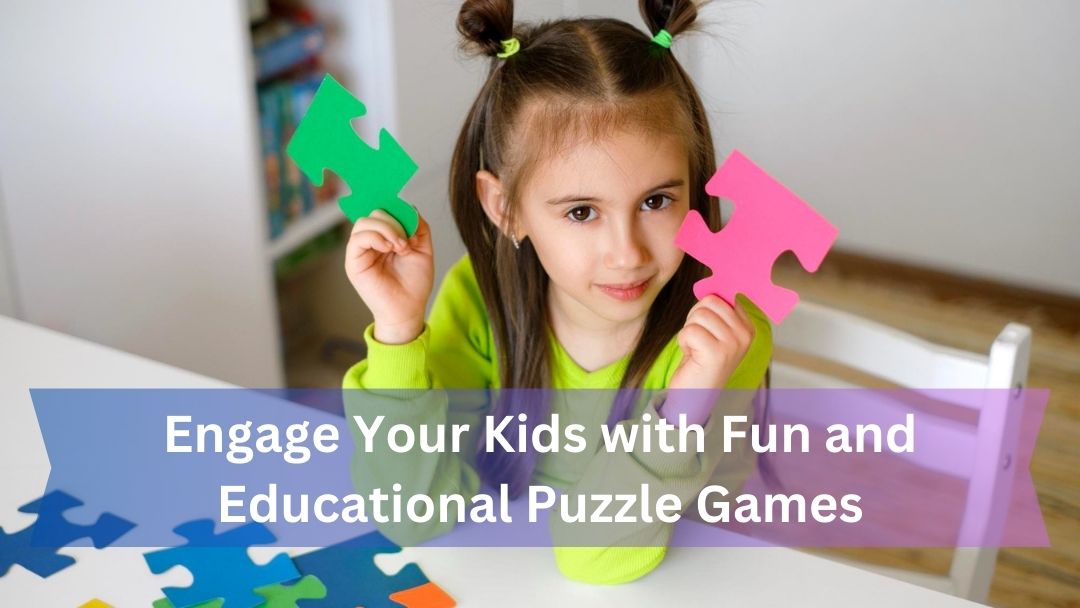
Engage Your Kids with Fun and Educational Puzzle Games
This post may contain affiliate links, which means I may earn a commission for purchases made through these links. Your support will encourage us to continue adding value to you through blogs like this. Learn more on my Private Policy page.
1) Introduction
Are you looking for innovative ways to keep your kids entertained and engaged? Look no further than fun and educational puzzle games! These engaging activities not only provide great entertainment, but they also offer numerous cognitive benefits for children. From enhancing problem-solving skills to improving critical thinking and spatial reasoning, puzzle games are a fantastic way to promote learning while having fun. So, if you’re ready to engage your kids in an exciting world of brain-teasers and challenges, join us as we explore the endless possibilities of puzzle games that will captivate and educate your little ones.
2) Benefits of Puzzle Games for Kids
Puzzle games for kids offer various benefits that help in their overall development. These interactive games not only provide entertainment but also enhance critical thinking and problem-solving skills in children. By engaging in puzzle games, kids are challenged to analyze different pieces and find the best way to fit them together, improving their logical reasoning abilities. Moreover, these games stimulate cognitive skills such as memory and attention, as children have to remember the shapes and patterns to solve the puzzles successfully. In addition to that, puzzle games encourage creativity and imagination as children have to think outside the box to solve them. They learn to approach problems from different angles and come up with innovative solutions. By engaging in these fun and educational activities, kids can develop a wide range of skills while having a great time.
1. Improves problem-solving skills
By solving puzzles, kids learn how to analyze problems, break them down into smaller parts, and find solutions. This process of breaking down a complex puzzle into manageable pieces helps children develop their problem-solving skills. Puzzle games require children to think strategically and make decisions, improving their ability to think critically. As kids solve puzzles with increasing complexity, they develop the skills to find innovative solutions to challenges. These games also help children develop perseverance and a never-give-up attitude when faced with difficult puzzles. The process of solving puzzles teaches children that with patience and determination, they can overcome any obstacle that comes their way.
2. Enhances cognitive abilities
Playing puzzle games improves memory retention as kids need to remember shapes, colors, patterns, and other details to solve the puzzles successfully. In order to complete a puzzle, children have to hold multiple pieces of information in their mind and recall them when needed. This constant exercise of memory helps in strengthening the neural pathways associated with memory retention. Additionally, puzzle games stimulate the brain’s executive functions, including attention, planning, and decision-making. As children focus on finding and fitting the puzzle pieces, their attention span improves. They also learn to plan ahead and make thoughtful decisions, enhancing their cognitive skills. Moreover, regular engagement in puzzle games has been found to boost spatial awareness and visual perception skills in children. By analyzing and manipulating different puzzle pieces, kids develop a better understanding of spatial relationships and improve their ability to visualize objects in different orientations. Lastly, completing puzzles requires logical reasoning skills which are crucial for cognitive development in children. Kids learn to think logically and analyze different possibilities while fitting the pieces together. This helps in enhancing their critical thinking abilities and problem-solving skills, which can be applied in various real-life situations.
3. Boosts creativity and imagination
Puzzle games allow kids to explore different possibilities and use their creativity to solve problems. These games provide a platform for children to think outside the box and come up with innovative solutions. As they engage with the various puzzle pieces, kids can experiment with different ways to fit them together, using their imagination to create new patterns and arrangements. This not only enhances their problem-solving skills but also fosters imaginative play. Children can even create stories or scenarios around the images or themes depicted in the puzzles, adding a whole new level of creativity to their puzzle-solving experience. In addition, these games encourage out-of-the-box thinking, as kids are challenged to find unique approaches to solving the puzzles. They can customize their approach by using creative strategies, such as sorting the pieces by color or starting from the edges and working their way in. This flexibility allows children to think creatively and find their own unique methods to solve the puzzles.
4. Develops patience and perseverance
Puzzle games teach children valuable life skills such as the value of patience. As they work towards finding the solution, kids learn that they need to take their time and not rush through the process. They understand that solving a puzzle requires patience and that they may not find the solution right away. This teaches them the importance of staying focused on a task even when faced with difficulties or setbacks. Completing challenging puzzles also requires perseverance as children may need multiple attempts before finding the correct solution. This helps them develop a never-give-up attitude and the determination to keep trying until they succeed. Puzzle games provide a safe and supportive environment for kids to practice patience and perseverance, allowing them to grow and develop these important traits.


Fiddlys Kid’s Wooden Jigsaw Puzzle Games


Wild Animals Puzzle
3) How to Choose the Right Puzzle Games for Your Kids
When it comes to engaging your kids with fun and educational puzzle games, there are a few factors to consider. First, you should consider their age and developmental stage. Different puzzles are designed for different age groups, so it’s important to choose puzzles that are appropriate for your child’s abilities. Next, you should look for puzzles that have educational value. These could be puzzles that teach letters, numbers, colors, or other important concepts. Additionally, it’s important to consider your child’s interests and preferences. Choose puzzles that align with their interests, whether it be animals, vehicles, or superheroes. Finally, to keep your child challenged and engaged, choose puzzles with varying difficulty levels. This way, they can start with simpler puzzles and gradually progress to more complex ones as their skills improve. By considering these factors, you can ensure that the puzzle games you choose for your kids are both enjoyable and educational.
1. Consider their age and developmental stage
When selecting puzzle games for your kids, it’s essential to consider their age and developmental stage. Younger children may benefit from simpler puzzles with larger pieces, as they are still developing their fine motor skills. On the other hand, older children can handle more complex puzzles that challenge their cognitive abilities and problem-solving skills. One way to gauge the appropriateness of a puzzle is by checking the recommended age range provided on the packaging. This serves as a helpful guide to ensure that the puzzle aligns with your child’s developmental level. Additionally, it’s important to recognize that each child may have varying levels of proficiency in puzzle solving. Adjusting the difficulty level accordingly will ensure that they are both engaged and motivated to continue their puzzle-solving journey.
2. Look for educational value
When choosing puzzle games for your kids, it’s important to consider their educational benefits. Look for puzzles that not only entertain but also teach important concepts such as shapes, colors, letters, numbers, and animals. These educational puzzles can help your child learn while having fun. Additionally, consider puzzles that promote critical thinking and problem-solving skills. These types of puzzles can improve your child’s logical reasoning and analytical skills. Another aspect to consider is choosing puzzles with themes related to subjects your child is learning in school. This can reinforce their knowledge and make learning more enjoyable. Lastly, puzzles that encourage creativity and imagination can also be beneficial for your child’s development. These puzzles allow your child to think outside the box and come up with unique solutions, enhancing their creative thinking abilities.
3. Consider their interests and preferences
Taking into account your child’s interests is key when selecting puzzle games. If your little one is passionate about animals, consider choosing puzzles that feature their favorite creatures or wildlife scenes. This way, they can have fun while also learning about different species and habitats. Additionally, it’s important to consider your child’s hobbies or favorite characters from books, movies, or TV shows when choosing themed puzzle games. By incorporating their interests into the puzzles, you can make the learning experience more enjoyable and engaging for them. Furthermore, involving your child in the decision-making process can increase their sense of ownership and excitement. Ask them what types of puzzles they enjoy or what subjects they are interested in. Their input will not only make them feel valued but also ensure that the puzzles align with their preferences. Lastly, observe your child during playtime to identify their preferences. Pay attention to which types of puzzles they spend more time on or show enthusiasm for. By understanding their interests and preferences, you can choose puzzle games that truly capture their attention and keep them engaged for hours of fun and learning.
4. Choose puzzles with varying difficulty levels
To keep your kids engaged and continuously learning, it’s important to select puzzle games that offer a range of difficulty levels. This way, they can start with simpler puzzles and gradually increase the complexity as their skills improve. By providing a progression in difficulty, you can challenge your child and encourage them to push their boundaries. Additionally, consider puzzles that have multiple difficulty options or adjustable settings. This allows you to customize the level of challenge according to your child’s abilities, ensuring that they are neither overwhelmed nor bored. To add more excitement and variety, introduce different types of puzzles, such as jigsaw puzzles, 3D puzzles, or brain teasers. This will keep your child engaged and stimulate different areas of their brain.
4) Best Puzzle Games for Different Age Groups
Engage your preschoolers with fun and educational puzzle games that are designed specifically for their age group. These games are not only entertaining but also contribute to their overall development. Through colorful and interactive puzzles, preschoolers can learn important concepts such as shapes, colors, letters, and numbers. Additionally, these puzzles help improve their fine motor skills and hand-eye coordination. For elementary school kids, puzzle games can further enhance their critical thinking skills and problem-solving abilities. These games encourage them to think logically, analyze patterns, and find creative solutions. Pre-teens and teens, on the other hand, can enjoy challenging puzzle games that stimulate their minds and encourage strategic thinking. These games require higher-level reasoning and often involve complex puzzles or riddles. Regardless of the age group, puzzle games are a great way to keep your kids entertained while also helping them develop important cognitive skills.
1. Preschoolers (Ages 3-5)
Preschoolers can benefit from simple jigsaw puzzles that help improve their hand-eye coordination. By manipulating puzzle pieces and fitting them together, preschoolers can enhance their motor skills and develop precision in their movements. In addition to jigsaw puzzles, shape sorting puzzles are a great choice for preschoolers as they help develop their shape recognition skills. These puzzles require children to match shapes with their corresponding spaces, allowing them to practice identifying and categorizing different shapes. Furthermore, puzzle games like matching and memory cards can enhance preschoolers’ concentration and memory abilities. By flipping cards and matching the pairs, children can exercise their focus and strengthen their memory skills. Lastly, colorful puzzles with large pieces are perfect for preschoolers to practice problem-solving and spatial awareness. These puzzles not only engage their visual senses but also challenge them to think critically and strategically to complete the image.
2. Elementary School Kids (Ages 6-10)
Elementary school kids can expand their vocabulary and language skills through crossword puzzles. These puzzles not only engage their minds but also introduce them to new words and concepts. Additionally, number puzzles like Sudoku can enhance their logical reasoning abilities by challenging them to think critically and strategically. Maze puzzles are another great option for elementary school kids as they challenge their problem-solving skills while keeping them engaged in a fun and interactive activity. Lastly, pattern recognition puzzles are perfect for sharpening their observation and analytical skills. By identifying and analyzing patterns, elementary school kids can develop a keen eye for detail and improve their overall cognitive abilities.
3. Pre-teens and Teens (Ages 11+)
Pre-teens and teens can engage in complex jigsaw puzzles that feature more pieces and intricate designs. These puzzles not only test their patience and perseverance but also improve their problem-solving abilities. By carefully analyzing the pieces and determining their correct placement, pre-teens and teens can develop their spatial awareness and logical reasoning skills. In addition to jigsaw puzzles, brain teaser puzzles like Rubik’s Cube provide a challenging experience for pre-teens and teens. This puzzle requires them to think critically and strategize in order to solve it. By manipulating the cube and finding the right combinations, they can enhance their problem-solving abilities and sharpen their analytical thinking. Strategy-based puzzle games like chess or Sudoku variants are also great options for pre-teens and teens. These games not only provide hours of entertainment but also encourage critical thinking and strategic planning. By analyzing different moves and making thoughtful decisions, pre-teens and teens can develop their logical reasoning and decision-making skills. Lastly, word search puzzles can help pre-teens and teens expand their vocabulary while enjoying a brain-stimulating activity. By searching for hidden words in a grid of letters, they can improve their language skills and increase their word recognition abilities. These puzzles also promote attention to detail and enhance their concentration and focus.


Wild Animal Jigsaw Puzzle for Kids


THE BOOK TREE Wildlife
5) Frequently Asked Questions
1. What are some examples of fun and educational puzzle games for kids?
Engage Your Kids with Fun and Educational Puzzle GamesPuzzle games are not only fun but also provide numerous benefits for children. They help improve problem-solving skills, enhance cognitive abilities, boost creativity and imagination, and develop patience and perseverance. But how do you choose the right puzzle games for your kids? Consider their age and developmental stage, look for educational value, consider their interests and preferences, and choose puzzles with varying difficulty levels. By taking these factors into account, you can ensure that your kids have an enjoyable and educational experience with puzzle games.
2. Are there puzzle games suitable for different age groups?
Yes, there are puzzle games available that cater to various age groups, from toddlers to teenagers. These puzzle games are designed to be engaging and educational, providing age-appropriate challenges and learning opportunities. For younger children, there are simple puzzles with large pieces and bright colors that help develop their hand-eye coordination and problem-solving skills. These puzzles not only engage their visual senses but also challenge them to think critically and strategically to complete the image. On the other hand, older kids can enjoy more complex puzzles that require critical thinking, logical reasoning, and spatial awareness. These puzzles provide a challenge and stimulate their minds, helping them develop important cognitive skills.
3. Can playing puzzle games improve critical thinking skills in kids?
Playing puzzle games can greatly enhance children’s critical thinking abilities as they are constantly required to solve problems and think logically. These games promote analytical skills as kids need to carefully analyze the situation and find the best solution. By engaging in puzzle games, children develop their problem-solving skills and learn to approach challenges from different angles, which is a valuable skill to have in various aspects of life. Furthermore, playing puzzles also helps children improve their cognitive skills, such as memory, attention, and concentration. The need to remember patterns, shapes, and clues in order to progress in the game exercises their memory and strengthens their ability to focus and concentrate. Overall, puzzle games provide an enjoyable and educational activity that can significantly benefit children’s cognitive development.
6) Conclusion
In conclusion, puzzle games offer numerous benefits for kids of all ages. They improve problem-solving skills, enhance cognitive abilities, boost creativity and imagination, and develop patience and perseverance. When choosing the right puzzle games for your kids, consider their age and developmental stage, look for educational value, consider their interests and preferences, and choose puzzles with varying difficulty levels.For preschoolers, simple jigsaw puzzles, shape sorting puzzles, matching and memory cards, and colorful puzzles with large pieces are great options to enhance their motor skills, shape recognition, concentration, and problem-solving abilities.Elementary school kids can benefit from crossword puzzles to expand their vocabulary, number puzzles like Sudoku to enhance logical reasoning, maze puzzles to challenge their problem-solving skills, and pattern recognition puzzles to sharpen their observation and analytical skills.Pre-teens and teens can engage in complex jigsaw puzzles, brain teaser puzzles like Rubik’s Cube, strategy-based puzzle games like chess or Sudoku variants, and word search puzzles to develop spatial awareness, problem-solving abilities, logical reasoning, and language skills.By engaging your kids with fun and educational puzzle games, you not only keep them entertained but also help them develop important cognitive skills for their overall growth and development. So, start exploring the wide range of puzzle games available and watch your kids thrive while having a great time.
Lishika’s choice of the day